Your cart is empty now.

Grind Size Explained: How It Changes Flavor (With Simple At-Home Tests)
- 24 May, 2026
- Jon Baatz
By Jon & Missy Baatz | 803 Outpost Coffee
There’s a quiet moment every morning, just before the rush of the day begins, when the house is still. The kettle is on, your favorite mug is waiting, and you’re anticipating that perfect first sip. But if you’ve ever gone through your morning ritual only to end up with a brew that tastes intensely bitter or uncomfortably sour, you know that buying good beans doesn't automatically guarantee a great cup.
More often than not, the culprit isn't the coffee—it’s the grind size.
Here at 803 Outpost Coffee, we are fanatical about our roast-to-order process. We source specialty-grade beans and roast them with craftsmanship so you can experience the absolute best flavor in every batch. But once those beans arrive at your door, the way you grind them dictates how all that hard work actually ends up tasting in your mug.
Let's break down the mechanics of coffee extraction, how grind size changes flavor, and a few simple ways you can test and dial in your grind right in your own kitchen.
The Science of Extraction: Why Grind Size Matters
Think of coffee extraction like rain falling on the earth. If the water hits a patch of large, coarse rocks, it flows straight through, picking up very little along the way. If it hits tightly packed, fine soil, it pools, taking a long time to seep through and pulling every single mineral out of the dirt.
Coffee works the exact same way. When hot water meets coffee grounds, it extracts the flavors, oils, and compounds locked inside the bean.
-
Under-Extraction (Too Coarse): The water passes through the grounds too quickly. It doesn't have time to pull out the natural sugars and deeper notes, leaving you with a cup that tastes thin, salty, or sharply sour.
-
Over-Extraction (Too Fine): The water gets trapped in the densely packed grounds. It pulls out too much from the coffee, breaking down the harsher compounds and leaving you with an aggressively bitter, dry, or ashy taste.
-
The Sweet Spot: The water flows at the perfect rate, pulling out the bright acidity, the sweet sugars, and the rich, complex base notes in perfect harmony.
Matching the Grind to Your Gear
To get that perfect extraction, your grind size needs to match your brewing method. Here is a quick guide to getting it right:
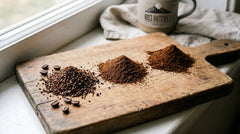
Coarse (Looks like Kosher Salt or Sea Salt)
Best for: French Press and Cold Brew. Because these methods involve letting the coffee steep in water for a long time (immersion brewing), you need larger particles so the coffee doesn't over-extract and turn bitter over those several minutes (or hours).
Medium (Looks like Sand)
Best for: Standard Drip Machines, Pour-Over (Chemex, V60), and Aeropress. This is the versatile middle ground. Water passes through these grounds at a steady, moderate pace, pulling out a balanced flavor profile. If you're brewing a rich, daily cup in a standard drip machine to kickstart your workday, this is where you want to be.
Fine (Looks like Table Salt to Powdered Sugar)
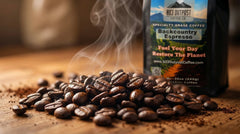
Best for: Espresso Machines and Moka Pots. These methods use intense pressure to force water through the coffee in a matter of seconds. The water needs maximum surface area to pull out the rich, syrupy flavors quickly. (This is exactly what you need if you are pulling shots of our Backcountry Espresso blend!)
The Steward’s Tip: If you're investing in specialty-grade coffee, we highly recommend using a burr grinder. Blade grinders chop the beans into uneven chunks—some coarse, some fine—which guarantees an uneven, muddy extraction. A burr grinder crushes the beans to a uniform size for a clean, predictable brew.
The At-Home Taste Test
You don't need fancy equipment or a highly trained palate to dial in your grind. Try this simple experiment tomorrow morning:
-
The Control Cup: Brew your coffee exactly how you normally do. Take a sip and really pay attention to the finish.
-
The Adjustment: * If your coffee tastes bitter, dry, or leaves an astringent feeling on your tongue, grind coarser next time.
-
If your coffee tastes sour, overly acidic, or unpleasantly sharp, grind finer next time.
-
-
The Comparison: Brew a second cup with the new grind size, keeping your water temperature and the amount of coffee exactly the same. Notice how the bitterness fades into sweetness, or how the sourness rounds out into a rich, full body.
Purpose in Every Cup
Dialing in your coffee isn't just about avoiding a bitter brew; it's about intentionality. It’s about slowing down and embracing a moment of purposeful living before you tackle whatever the day has in store for you.
Every bag of 803 Outpost Coffee you brew helps fund reforestation and environmental stewardship. By taking the time to grind those beans correctly, you're not just making a better cup of coffee—you’re honoring the origins of the coffee and doing justice to the wild places we are working so hard to protect.
Brew well and live with purpose.
– Jon & Missy
Search
Archive
- May 2026
- March 2026